 Loading


The global aluminium supply chain has entered a critical phase. The collapse of Middle East peace negotiations and the US decision to blockade the Strait of Hormuz have reignited strong concerns among market participants, amplifying existing uncertainty.
The situation was already fragile: Iran had effectively restricted traffic through the strait, but the recent US move has further worsened the situation.
The result is a market increasingly concerned about a prolonged conflict, with direct implications for global trade flows.
Transport And Costs: The Risk Of An Inflationary Spiral
One of the first tangible effects is in logistics. Shipping lines are already reacting with significant freight increases, while new complications are emerging around transit through the strait.
Reports of possible Iranian tolls — even in cryptocurrency — have added to market anxiety. There are fears that such measures could extend to aluminium, further slowing shipments.
Participants describe a rapidly deteriorating environment: transport costs are expected to rise sharply, with cascading effects across the supply chain.
Uncertain Availability: Gulf Flows At Risk
A critical issue concerns the ability to move metal produced in the Persian Gulf. It remains unclear how much and how quickly aluminium stored at smelter yards will be able to leave the region, creating a potential bottleneck.
This uncertainty keeps the market in a state of tension, where supply exists but may quickly become inaccessible.
Rising Logistics Costs: The Impact Of New Charges
Cost pressure extends beyond base freight rates. Major shipping companies are introducing emergency surcharges, further increasing costs for market participants.
Among them, Mediterranean Shipping Company has implemented emergency fuel surcharges (EFS) across multiple global routes. These additional charges, applied per container and varying by route, reflect higher fuel costs and operational disruptions linked to geopolitical tensions.
The result is a more expensive logistics system, where each step in the supply chain adds to the final cost of metal.
Europe Under Pressure: Premiums Surge
Supply chain tensions are already visible in Europe. Aluminium billet premiums have risen sharply, reflecting a rapidly tightening market. In northern Germany, 6063 billet premiums reached $1,030–1,100 per tonne, up significantly from $560–600 per tonne at the end of February.
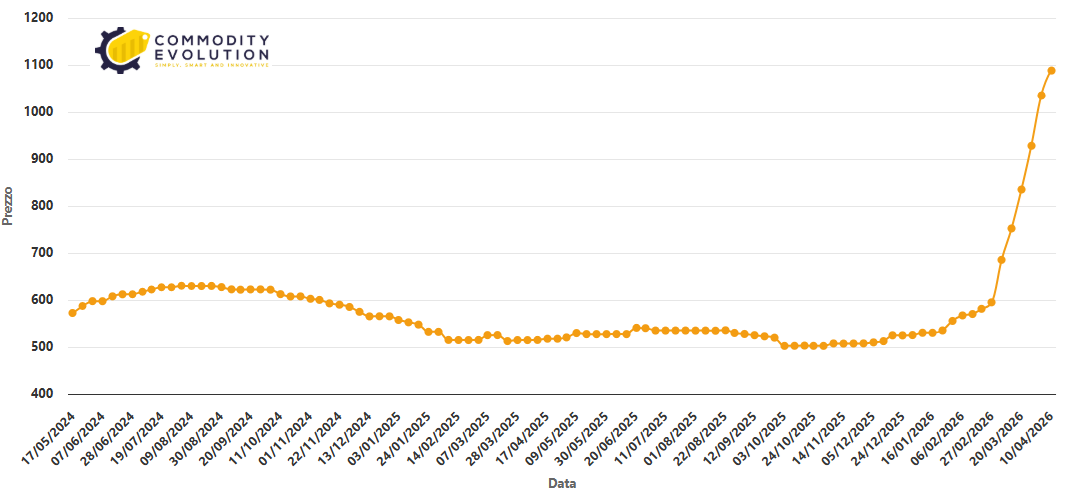
6063 Aluminum Billet Premium for Extrusion DDP Payment Lme 30 Days – Germany $/ton – Powered by Commodity Evolution