 Loading

 The European primary aluminium market showed the first signs of recovery after the summer slowdown, with consumers returning and transactions becoming more concentrated in the upper part of the premium ranges.
The movement does not yet indicate a generalized shortage of metal. Overall availability remained relatively stable compared with the previous week, while tensions were concentrated on particular shapes, brands and duty-paid units considered suitable for specific contracts.
The premium for P1020A aluminium available in a Rotterdam warehouse with duty paid was indicated at $460-500 per tonne on September 1. During the week, however, transactions were observed between $480 and approximately $510, with liquidity predominantly concentrated in the upper part of the market.
The duty-unpaid segment remained weaker and less liquid, with the premium unchanged at $420-470 per tonne. This divergence shows that the main bullish factor is not a general reduction in supply, but the search for already-cleared metal of an origin and shape suited to the requirements of European buyers.
| Indicator | September 1 Level | Weekly Comparison |
|---|---|---|
| P1020A duty-paid, Rotterdam | $460-500/t | Provided text: from $460-510/t |
| Observed duty-paid transactions | $480-around $510/t | Concentrated in the upper part |
| Published duty-paid midpoint | $480/t | $485/t based on the indicated prior range |
| P1020A duty-unpaid, Rotterdam | $420-470/t | Unchanged |
| Duty-unpaid midpoint | $445/t | Unchanged |
| Differential between the midpoints | $35/t | In favor of duty-paid material |
| US tariff on Canadian aluminium | 50% | Proposed reduction to 25% did not occur |
The First Figure Contains An Inconsistency
The provided text describes the duty-paid premium as recovering slightly and states that the range widened upward. The reported values, however, indicate a current range of $460-500 per tonne, compared with $460-510 in the previous week.
Taken literally, these figures would describe a $10 reduction in the upper limit, not a widening. The midpoint would also decline from $485 to $480 per tonne.
The market narrative, the transactions recorded up to approximately $510 and the reference to an upward widening suggest that the two ranges may have been reversed in the original text. The more coherent reading would therefore be $460-510 in the current session, compared with $460-500 one week earlier.
Without confirmation, however, the figure should not be corrected arbitrarily. The official reference is maintained at $460-500, while the improvement is interpreted through the greater liquidity observed between $480 and $510.
The distinction is important: the bullish signal comes from transactions and the distribution of liquidity, not from the arithmetic change in the ranges as reported.
The Recovery Currently Concerns Activity
The return of European users from holidays produced an increase in purchasing after several weeks characterized by limited volumes.
Overall availability does not appear to have declined significantly. The change occurred mainly on the demand side: consumers and operators returned to the market to cover requirements previously postponed or to complete September commitments.
In an illiquid market, even a moderate increase in purchases can quickly move transactions toward the upper part of the range. This does not necessarily mean that all buyers must pay $500-510, but it signals a reduced willingness among sellers to accept lower levels for the most sought-after units.
The market has not yet completely emerged from summer weakness. To confirm a more structural recovery, it will be necessary to observe whether the increase in activity continues in the coming weeks and involves a broader number of consumers.
Shape And Brand Become More Important Than Total Volume
Operators described a market characterized by bottlenecks involving specific shapes and brands.
The term P1020A identifies a standard grade of primary aluminium, but it does not make all available units perfectly interchangeable. Consumers may have requirements relating to physical shape, dimensions, packaging, producer, origin and environmental documentation.
Certain brands may also already be qualified for the buyer’s industrial processes, while others require new checks. Replacing one unit with another can therefore be less straightforward than aggregate warehouse availability suggests.
This explains why some operators continue to regard lower levels as representative, while transactions involving the most sought-after units are concentrated toward $500-510.
The market can therefore simultaneously have:
- relatively stable overall availability;
- sufficient material from certain brands;
- localized shortages of specific shapes or origins;
- higher premiums for already-qualified or immediately usable units.
The dominant short-term constraint is not the total quantity of aluminium present in Europe, but the availability of the correct metal in the required location, shape and with the necessary documentation.
Duty-Paid Maintains An Advantage Over Duty-Unpaid
The duty-paid premium incorporates the availability of metal that has already been imported and cleared through customs in the European Union. The buyer can use it without directly bearing the customs charge and related procedures.
Duty-unpaid material is instead held in a warehouse before the duty has been paid. Its premium is normally quoted on a different basis because the import cost remains payable by the party placing it on the European market.
On September 1, the midpoint of the duty-paid range was $480 per tonne, while the duty-unpaid midpoint was $445. The differential between the two references was therefore $35.
| Segment | Indicated Range | Midpoint | Market Condition |
|---|---|---|---|
| Duty-paid | $460-500/t | $480/t | Liquidity concentrated toward the top |
| Duty-unpaid | $420-470/t | $445/t | Limited trading and rangebound market |
| Differential | — | $35/t | Premium for already-cleared availability |
The differential should not be interpreted as a direct measure of the duty. The two ranges also reflect origin, brand, logistics, financing and the timing of the purchase.
The greater activity in duty-paid material indicates that consumers are favoring immediately available units. Duty-unpaid material has not benefited from the same recovery and remains broadly rangebound.
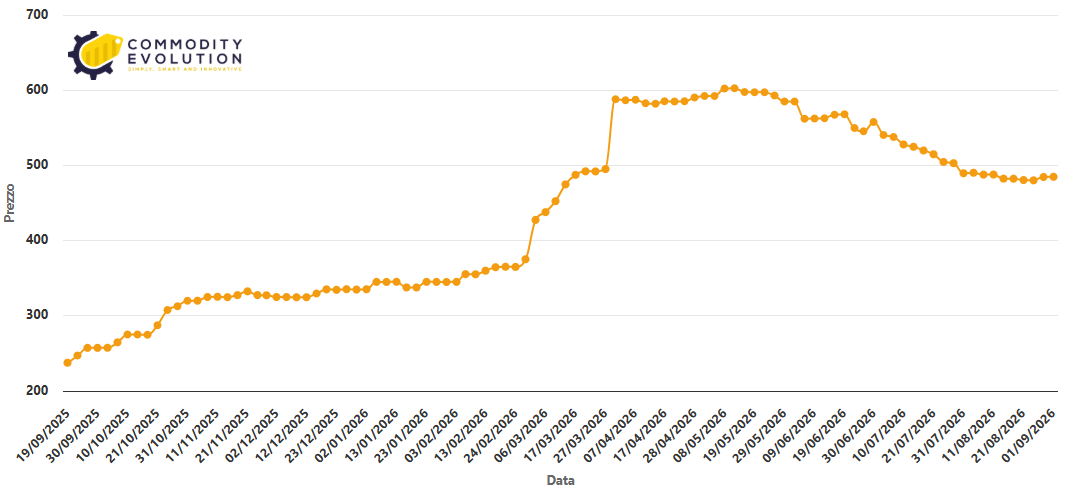
Premium Aluminum P1020A – DDP Delivered Duty Paid – Rotterdam $/ton – Powered by Commodity Evolution
Canada Has Become The Main Source Of Uncertainty
During the summer, the European market was able to rely on good availability of Canadian aluminium. The 50% US tariff reduced the attractiveness of sending these units to the United States, supporting their presence in alternative markets.
Europe was one of the natural destinations. Canadian metal, often associated with a relatively low emissions footprint due to the extensive use of hydroelectric power, contributed to the availability of duty-paid and low-carbon material.
On August 19, the possibility emerged that the United States could reduce the tariff on Canadian aluminium from 50% to 25%. The reduction did not subsequently materialize, but the episode highlighted how quickly trade flows could change.
If the US tariff remained at 50%, the American market would continue to be less attractive for part of the Canadian metal, leaving greater quantities potentially available to Europe.
If the tariff were reduced to 25%, exports to the United States could become more competitive again. Some of the units currently directed toward Europe could therefore be reallocated, reducing duty-paid supply in Rotterdam.
The causal chain would be:
reduction in the US tariff → greater attractiveness of the US market → diversion of Canadian metal → lower European availability → increase in duty-paid premiums.
For now, this is a potential risk. The 50% regime remains the indicated reference and the discussed reduction did not come into effect.
Stockholders Become More Protective
Tariff uncertainty has changed the behavior of some stockholders even without yet producing a physical reduction in available quantities.
If Canadian metal could become more valuable in subsequent weeks, the owner has less incentive to sell it quickly at current levels. They may prefer to retain it while waiting for greater clarity or higher premiums.
This increased protection of available units can reduce effective liquidity before trade flows actually change. The metal remains physically present but is offered less aggressively.
The distinction between physical availability and commercial availability therefore becomes fundamental. A warehouse may contain adequate quantities, but only part of them may actually be offered at the price buyers are prepared to pay.
Seller caution helps explain why transactions became concentrated in the upper part of the range despite the absence of a general decline in supply.
Demand For Duty-Paid Green Aluminium Increases
Uncertainty concerning Canada also increased interest in lower-emissions duty-paid aluminium.
Some buyers had allocated Canadian units to future contracts or used them to cover positions already sold. The risk that flows could be redirected toward the United States encouraged them to look for alternative material with compatible environmental and commercial characteristics.
This demand does not necessarily concern all available aluminium. It is concentrated on units capable of replacing Canadian metal in contracts already concluded, particularly when the buyer must comply with requirements relating to energy origin, carbon footprint or traceability.
As a result, the premium for green metal can strengthen even if the general premium remains within its current range. Once again, the market is divided by quality, shape, origin and documentation.
The phenomenon can become more significant when buyers have sold quantities they do not yet physically possess. The need to cover these short positions increases urgency and reduces their ability to wait for lower prices.
Duty-Unpaid Has Not Yet Followed The Movement
The duty-unpaid premium remained unchanged at $420-470 per tonne, with limited liquidity and minimal changes in levels considered tradable.
This segment continues to be monitored cautiously because of the decline in replacement costs reported in some Asian markets. If metal available in Asia becomes less expensive, European importers can theoretically replenish stocks at lower levels.
The effect is not immediate, however. The material must be purchased, financed, transported and delivered into European warehouses. Transit times, freight, origin, duties and the availability of suitable units can delay or weaken the transmission.
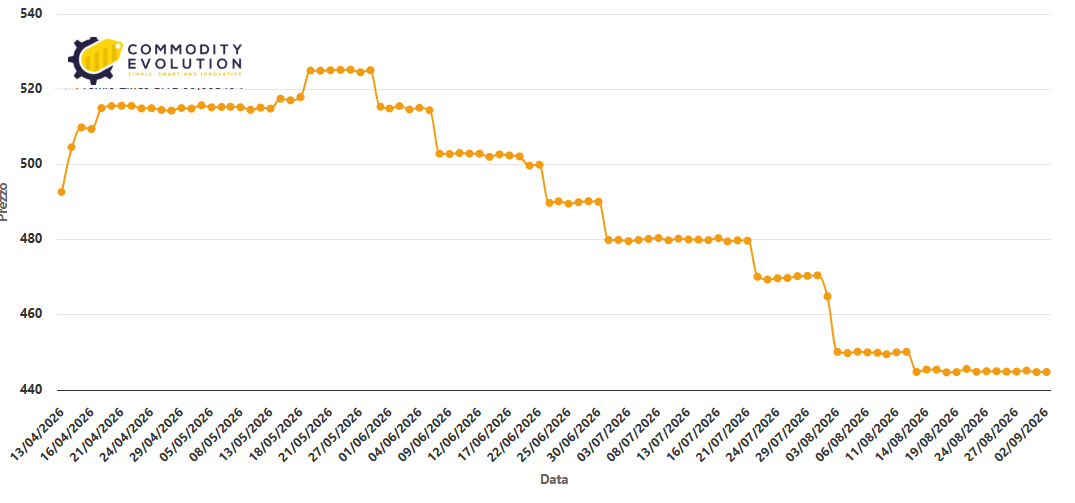
Premium Aluminum P1020A – DDU Delivered Duty Unpaid – Rotterdam $/ton – Powered by Commodity Evolution
The weaker Asian indications have therefore not yet translated into a reduction in the Rotterdam duty-unpaid premium.
The bearish chain remains possible:
lower Asian levels → lower replacement cost → more competitive European duty-unpaid offers → pressure on premiums.
For this mechanism to become visible, new offers or actual transactions below the $420 lower limit will need to emerge.
The Market Is Supported By A Risk, Not Yet By A Shortage
The European picture combines recovering demand with aggregate supply that remains stable. Support for premiums therefore comes more from the possibility of a future reduction in Canadian units than from an already evident shortage.
This difference determines the sustainability of the movement. An increase based on actual purchases and lower available stocks can consolidate; an increase based mainly on expectations of a tariff change can instead reverse quickly if the risk does not materialize.
The duty-paid market nevertheless appears better supported than duty-unpaid for three reasons:
- the return of European consumers;
- the search for specific shapes and brands;
- the protection of Canadian and low-emissions units.
Duty-unpaid remains exposed to Asian replacement costs and weak liquidity.
September Begins With A Wider Operating Range
The inconsistency in the data prevents a completely certain conclusion about whether the duty-paid assessment formally increased. Transactions between $480 and approximately $510 nevertheless identify a short-term operating area of $460-510 per tonne.
This range does not replace the published assessment of $460-500. It represents an analytical interval constructed by combining the stated reference with the levels actually observed during the week.
| Scenario | Rotterdam Duty-Paid | Condition |
|---|---|---|
| Central | $460-510/t | Recovering demand, stable supply and unchanged US tariff |
| Bullish | $510-550/t | Diversion of Canadian metal or greater scarcity of green units |
| Bearish | $430-460/t | Insufficient demand recovery and greater European availability |
| Duty-unpaid | $420-470/t | Rangebound market with potential pressure from Asian costs |
The central scenario envisages the duty-paid premium continuing to fluctuate between $460 and $510. The return of buying supports the upper end, but the absence of a generalized reduction in supply currently limits the possibility of a broader increase.
The bullish scenario would require a sustained move above $510. The main catalyst would be a change in the US tariff regime capable of attracting larger quantities of Canadian aluminium toward the United States. A growing need to cover green-metal contracts could also contribute.
Under these conditions, the premium could extend indicatively toward $520-550, but only if tariff risk produced an actual change in flows or commercial availability.
The bearish scenario would become more likely with a decline below $460. It would be consistent with European demand failing to sustain its recovery, less protective sellers and declining international replacement costs.
The ranges are indicative and are derived from the available physical-market references, not from a complete historical series. They should therefore not be interpreted as daily technical targets.
The US Tariff Remains The Decisive Catalyst
The return of operators from holidays has reactivated the European aluminium market, but the recovery remains selective. Duty-paid, green and sought-after branded units attracted greater interest, while duty-unpaid material remained rangebound.
Overall availability has not yet declined. The market is nevertheless assigning increasing value to the security of obtaining the correct material, particularly when contracts were structured on the assumption that Canadian aluminium would remain available.
In the short term, the duty-paid premium will be determined less by the total volume in warehouses and more by the commercial availability of specific units and expectations regarding Canadian flows.
As long as the US tariff remains at 50%, Europe should continue to receive a significant share of Canadian metal. A reduction to 25% would instead change the balance rapidly, making the US market more competitive and creating upside risk for Rotterdam.
September therefore begins with a premium supported by recovering demand, but above all by trade uncertainty. Turning the movement into a structural increase will require an actual reduction in available units, not merely the possibility that flows may change.