 Loading


Sluggish demand from stainless steel producers and bearish pressure on finished product prices have caused a further decline in quotations for nickel pig iron (NPI), the key raw material used in 300-series stainless steel production. According to industry sources, the market continues to show marked pessimism in the short term.
According to the most recent weekly assessment, the spot price of high-nickel NPI (10-15%) delivered yield (ddp) in China stood on Friday, May 2, between 970 and 985 yuan per unit of nickel (about $133-135), down 5 yuan from the previous week, when it was quoted between 975 and 990 yuan.
On the contract front, the weekly price for the same grade of NPI remained stable at 970-980 yuan per nickel unit, unchanged from the previous week.
Four Consecutive Weeks Of Declines: Negative Trend Phase Begins
This is the fourth consecutive week of declines for NPI prices, marking a total decline of between 25 and 30 yuan per unit of nickel from the peak on April 11, when values were between 1,000 and 1,010 yuan.
According to market sources, several factors are weighing on the segment: persistently weak end demand in the steel sector, low stainless steel prices, planned production cuts in the 300 series, and generally negative market sentiment.
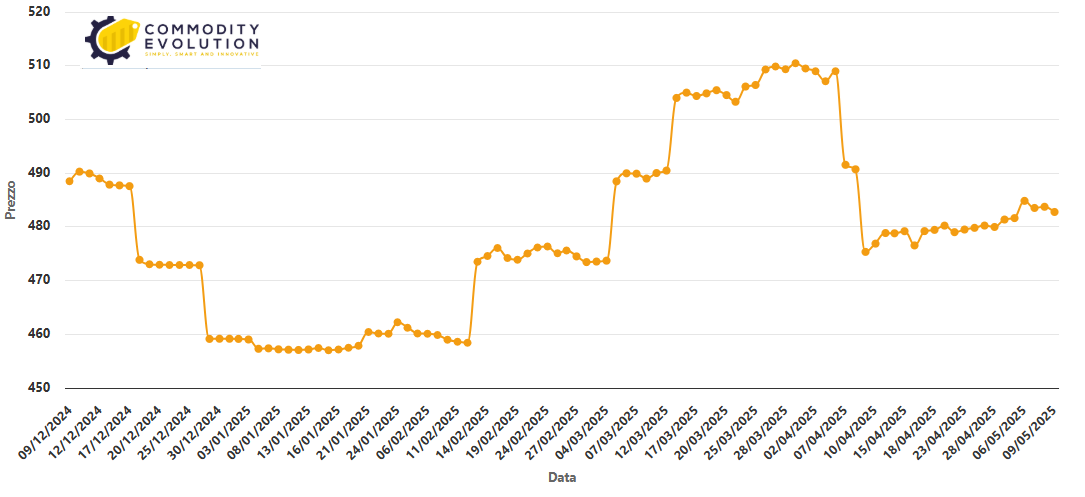
Nickel Pig iron – Cast iron – Nickel content 1.5% – 1.7% ExW – China $/ton – Powered by Commodity Evolution
Rising Production Costs Push Indonesian Plants Toward Losses
Despite the weak market, NPI production costs are rising, especially in Indonesia. Manufacturing plants are rapidly approaching the break-even point, and some are already operating at a loss.
“Buyers and sellers are highlighting their tight or even negative margins as negotiating leverage in negotiations,” said a Chinese nickel trader. “But I think the real problem is the poor performance of the whole stainless steel industry, which will push down NPI prices further. This is not good news either for Indonesian producers or for us traders.”
Weak Demand And Falling Stainless Steel Prices Keep Pressure On NPI
Production of 300-series crude steel has started to decline since the end of April. In May, China’s major steelmakers plan to cut 300-series production by about 4 percent compared to April, according to a local trader.
The production cut comes amid weak demand and stagnant steel prices, but high raw material supply costs, particularly of NPI, have pushed steel mills to further curb output.
“Steel mills have to balance rising costs with low selling price pressure,” said a Shanghai-based trader. “With increasing losses, the only way to reduce the pressure is to offload it to the raw material market by further lowering NPI purchase prices.”
Steel Mill Auction Prices Fall Further As Steel Futures Fall
One of the largest steel mills in southern China lowered its auction price by 30 yuan to 940 yuan per unit of nickel on Tuesday, May 6, clearly signaling the downstream industry’s intention to further reduce purchase prices.
The June stainless steel futures contract traded on the Shanghai Stock Exchange (SHFE) closed Wednesday, May 7 at 12,710 yuan per ton, down 65 yuan from the April 28 close. The price of stainless steel cold rolled coil, Thickness 3.25-3.98mm, Grade 304/1 (ex-stock, Chinese domestic market) also fell to $1,742/mt (May 9), down 0.21 percent from the previous day.
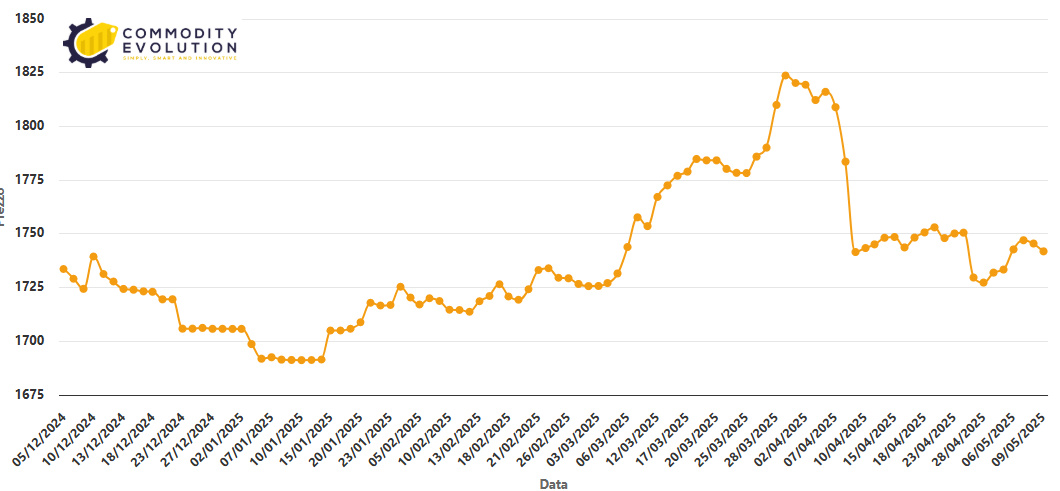
Hot Rolled Coils HRC Stainless Coil 304-1 – Thickness 3.25-3.98mm – L 1520 – China $/ton – Powered by Commodity Evolution
Declining Production Forecast And Uncertainty About U.S. Duties Make NPI Purchases Slow Down
Many market participants expect that the planned reduction in steel production will lead to lower demand for NPI, also slowing spot trading liquidity and exacerbating bearish pressure.
Continued uncertainty over U.S.-imposed tariffs has recently added an additional element of caution among buyers, who are now avoiding large orders for commodities.
“The trade war between the U.S. and China continues to have direct effects on the stainless steel industry,” said a Chinese trader. “As long as there is no clarity on tariff policies, many traders will stay put, slowing both export orders and production activity and raw material purchases.”
Rising Costs And Higher Royalties Threaten Profitability Of Indonesian NPI
Nickel ore prices in Indonesia continue to rise, buoyed by a squeeze on domestic supply and the introduction of a newly enacted nickel royalty increase, which has contributed to higher NPI production costs. Philippine Nickel Ore 1.5min CIF-China over Government Reference Price (HPM) rose to 54.05 euros/mt (May 2), up 0.52 percent from the week before.
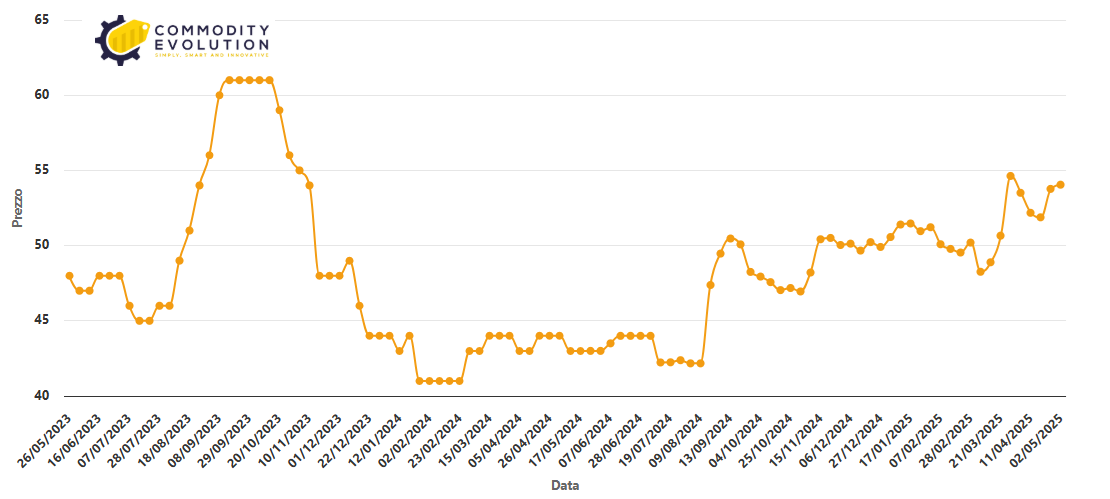
Philippine Nickel Ore 1.5%min CIF – China euro/ton – Powered by Commodity Evolution
Meanwhile, Indonesian NPI smelters continue to import ore from the Philippines, with the latest transactions for 1.3 percent Ni standing at around 39.87 euros/mt, further contributing to rising costs.
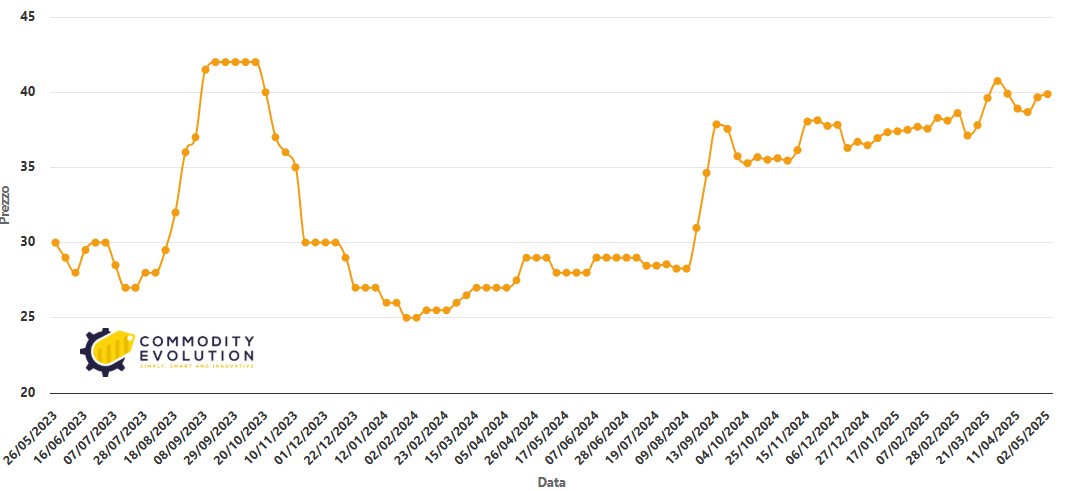
Philippine Nickel Ore 1.3%min CIF – China euro/ton – Powered by Commodity Evolution
Indonesian Producers Begin to Work at a Loss
According to an Indonesian NPI producer, the average input cost for local smelters was already between 960 and 970 yuan per unit of nickel at the end of April, and as ore prices continue to rise, most operators are now entering negative territory.
“We are also experiencing losses. We see no signs of a decline in domestic ore prices in the short term,” the producer said, stressing that margin erosion is now a critical issue. The price for Indonesian NPI with 10-14% Ni content, fob Indonesia, stood at $114-115/unit on May 7, down $1 from the previous day.
Production Cuts Already Underway: Could Intensify in May
Facing increasing pressure on margins, several smelters in Indonesia have already cut production in late April. According to some operators, the cuts could extend into May if NPI prices remain low and material costs remain high.
Meanwhile, continued profitability compression is reopening interest in the production of nickel matte, an intermediate product obtained mainly from NPI.
“If NPI prices continue to fall, producers will have no profit margin. This may push some Indonesian smelters, which have production flexibility, to reactivate nickel matte production lines,” said an industry analyst based in eastern China.
China’s NPI Manufacturers Also Struggle With High Costs
NPI producers in China, especially the higher-cost ones, are facing widespread losses, showing reluctance to source nickel ore at current prices despite the need to replenish inventories due to low inventory levels.
“Even if they want to sell at higher prices, the reality is that low NPI prices are forcing Chinese producers to try to lower purchase offers for ore as much as possible, even if they need supplies,” said a trader in southwest China.
Negative Short-Term Outlook For NPI Market
The nickel pig iron market is currently in a severe imbalance between tight supply and depressed demand. Continued weakness in stainless steel prices, coupled with reduced production volumes by major players in the 300 series, is also pushing down NPI quotations, which have now been declining uninterruptedly for more than a month.
Complicating the picture is a growing mismatch between selling prices and production costs, especially in Indonesia, where NPI plants are operating near or below the profitability threshold due to higher nickel ore costs and rising government royalties.
Pressure is also being felt in China, with many producers reluctant to buy new material in the face of low or negative margins.
Expectations for the short term thus remain pessimistic, and further production cuts, both in Indonesia and China, cannot be ruled out during May. Some operators may also begin to diversify production to alternative forms of nickel, such as nickel matte, in search of greater economic sustainability.
Finally, geopolitical uncertainty related to U.S.-China tariffs adds another layer of volatility to the market, curbing raw material purchases and hampering industrial planning. In the absence of signs of demand reversal or significant regulatory intervention, the NPI market could remain under pressure in the coming weeks.